
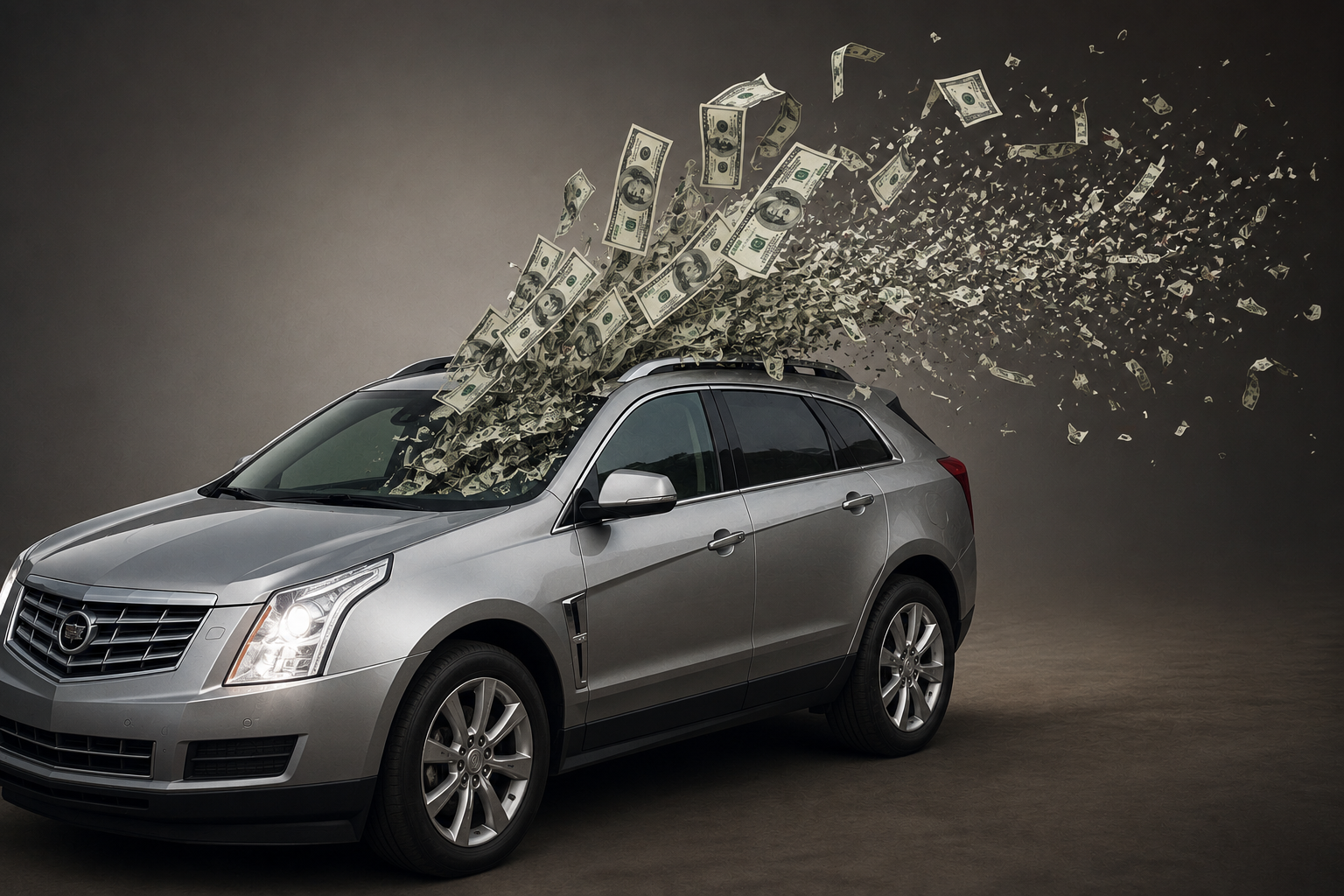
I’m not going to lie – spending $1,400 on a driveshaft replacement recently hurt.
The repair was for our 2012 Cadillac SRX with over 260,000 KM on it, and it completely came out of nowhere. One day the vehicle was driving, the next day we were dealing with vibrations, diagnosing the issue, and suddenly facing a four-figure repair bill.
And mentally, that money was already spent.
Not literally spent, but allocated in my mind toward other goals, other plans, and other things I actually wanted to use it for. So when the mechanic called with the estimate, it honestly felt like a hurricane came through and swept away savings that took time and discipline to build.
For a day or two, I was frustrated. Not because I didn’t understand the repair. I know enough about cars to understand that with age and mileage comes wear and tear. A driveshaft on a 14-year-old SUV with 260,000 KM failing isn’t shocking. It’s actually fairly understandable when you step back and look at the bigger picture.
But emotionally, it still stings when money disappears suddenly. And I think that’s something a lot of people don’t talk about enough in personal finance. Sometimes budgeting is not difficult because people are irresponsible. Sometimes it’s difficult because life keeps throwing expensive surprises at you while you’re trying to move forward financially.
That’s why I had to force myself to stop looking at the repair emotionally and start looking at it logically. The first thing I realized was this: the emergency fund actually worked.
That’s the entire purpose of savings.
The repair was annoying, yes. Unexpected, absolutely. But it did not send us into debt. I didn’t have to panic. I didn’t have to put the repair on a high-interest credit card and spend the next year paying it off. I didn’t have to borrow money or avoid the repair and risk making things even worse.
The money was there when life happened. That matters more than I initially gave myself credit for. I think many of us secretly believe savings only feel good when they keep growing. Watching the number go up feels rewarding. But the moment we actually need to use the money for a real emergency, it suddenly feels like failure.
But that’s backwards thinking.
Savings are not there to sit untouched forever while we admire them like a museum exhibit. They are there to protect us from financial chaos when life inevitably punches us in the face. And if you own an older vehicle long enough, eventually one of those punches is coming.
The reality is, modern vehicles are expensive no matter which route you take. People sometimes complain about spending $1,400 on repairs while ignoring the fact that replacing that vehicle could easily mean taking on a $700, $800, or even $1,000 monthly payment for years. Pick your pain.
When you frame it that way, repairing an older paid-off vehicle suddenly looks a lot more reasonable. If this repair helps keep the SRX on the road another year or two, then financially, it may still end up being the smarter move overall.
Another thing this experience reminded me of is how important it is to budget for things that feel “unexpected,” even though they’re actually guaranteed eventually.
Cars break.
Appliances fail.
Roofs leak.
Tires wear out.
Life happens.
The people who survive financially are not necessarily the ones who avoid problems. They’re usually the ones who prepare for problems before they happen. That’s why emergency funds matter so much. That’s why sinking funds matter. That’s why living slightly below your means matters. Because eventually, something will happen that you didn’t plan for. And when that moment comes, your savings become your financial shock absorbers.
So yes, I was upset about the $1,400. I still wish I had that money sitting untouched in savings. But at the same time, I’m grateful we had it when we needed it, because the alternative is borrowing, credit card usage and high interest payments.
At the end of the day, budgeting is not just about growing wealth. Sometimes it’s simply about protecting your peace when life decides to test your finances unexpectedly. And testing it will.