
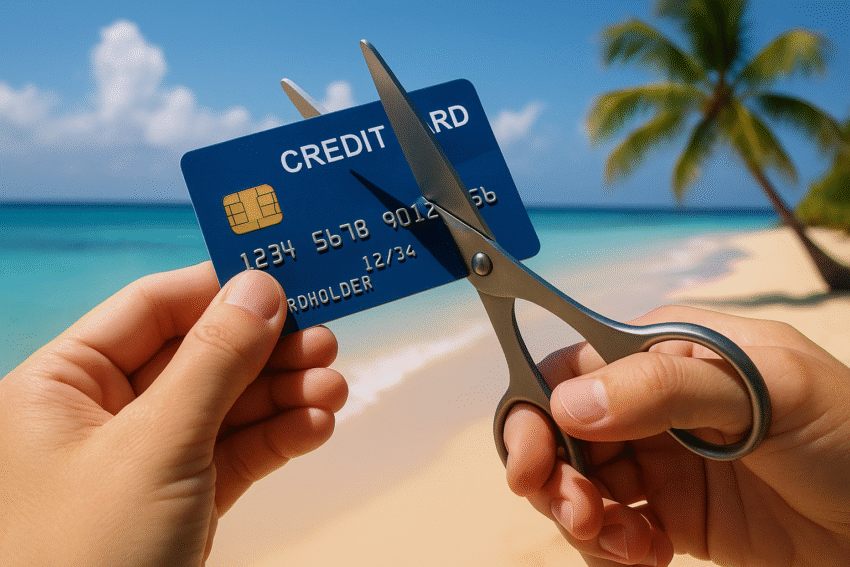
If your next vacation is costing you and the family over $5K but you have almost none of that saved, and plan to put it all on debt, stop! Yes, stop! Cancel it if you have already booked it, assuming there are no big penalties. If you haven’t booked it yet, thank goodness, that was going to be the worst idea ever.
Did I say stop? Yes, I did! A vacation that hasn’t been paid for shouldn’t even be considered. It is the same as wanting to buy a car but have nothing saved and plan to worry about paying for it later on. In other words, enjoy the vacation now, worry about paying it later. Well, not sure what you think will happen, that some genie will come out of a bottle and tell you not to worry about it, it has been taken care of? Or that the travel company you booked through will call you the first day you are back from vacation and tell you not to worry, it has been taken care of, as if you are in a coffee run and someone paid it forward for you.
Unfortunately, the world doesn’t operate on wishes and fantasies. That vacation will not pay for itself and you need to figure out how you will pay for it before you sign anything.
How to budget and save for your next vacation?
First off, don’t plan a vacation that will cost you one or more of your monthly salary, if it is not a minimum of 3-6 months out. This allows you enough time to save for it and pay off existing big debt. In fact, even 6 months may not be enough and in some cases it should be a year or more. Now it is understandable that all vacation planning may be clear one year out. But the idea is, even if you don’t know if you will be going on a vacation in 12 months from now, you should make it a habit to save for vacations and not just think your credit card is there to do the work for you.
Next, plan the type of vacation you want to do, based on your budget and finances: are you in a big financial hole, where you owe hundreds of thousands in credit card and other debt? Then it is not the smartest decision to take a 3 week cruise vacation in Europe, which will cost you and the family over $25K. Yes, we all want to go to these great and exotic destinations, but the reality of our finances may dictate otherwise. That is when we have to decide if we should do a staycation instead or something closer to home. Instead of spending thousands, you may end up spending just a couple of hundred and you will still enjoy it without the regret that comes after having spent so much on something that will put you in an even bigger hole.
Last, even if you have gone ahead and booked that all-inclusive vacation in a sunny Caribbean destination, costing you a significant chunk, it doesn’t mean you keep the spending momentum and expend even more money on clothing and other items in preparation for your vacation. Look for existing clothing from past vacations, chances are they are still good enough to use for this upcoming vacation, instead of wasting hundreds more buying new ones. And while at your destination, do you really need to go for that fancy for-fee restaurant, where you can eat free as part of your resort package?
Ever since pandemic restrictions were lifted a few years ago, coupled with inflationary pressures in the economy, travelling and vacations cost more, just like most things these days. While you don’t have to deprive yourself of traveling and enjoying vacations forever, you should plan it carefully to ensure you are not overspending and putting yourself in a deeper financial hole.
For background, see Government of Canada travel information, Statistics Canada’s data on household spending and savings and income, pensions, spending and wealth, the Financial Consumer Agency of Canada’s guide to credit cards, and the Bank of Canada. Related BudgetSense reading includes how we survived two weddings, birthdays, and a road trip without touching credit, why you always buy more than you planned at Costco, the truth about net worth, adjusting your budget, and the hidden strategy behind earning $400 a year with your credit card.