
For most people, inflation hasn’t felt like a headline number or an economic statistic. It has felt like standing at a grocery checkout, watching the total climb higher than expected… again. Or filling up the gas tank and realizing the same $60 that once covered the week now barely gets you halfway.
In other words, it is something they have personally experienced and lived on an almost daily basis for the last few years.
Over the past 12–18 months, families across Canada and beyond have quietly changed how they live, spend, and even think about money. Not in dramatic ways-but in small, daily adjustments that add up to a completely different financial reality.
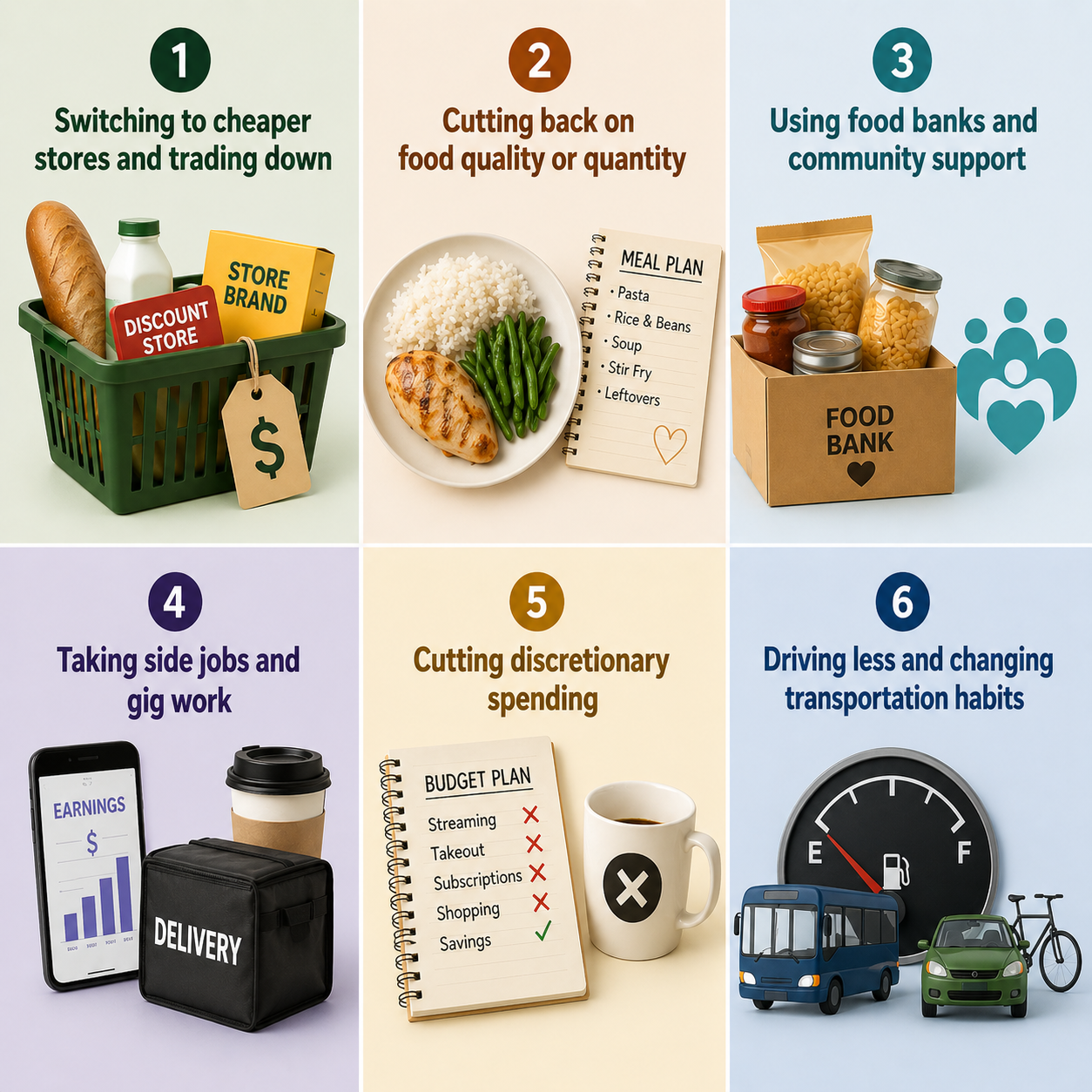
Here are six real coping strategies households are using right now, along with the emotional and financial impact behind them.
1. “We stopped shopping the way we used to”
One family in Ontario described it simply:
“We don’t shop by preference anymore. We shop by price first.”
They used to buy familiar brands at their regular grocery store. Now, they bounce between discount chains, flyer specials, and warehouse deals.
A typical weekly shop has become a strategic mission:
- Store brands instead of name brands
- Whatever meat is on sale dictates the meals
- Bulk buying only when it actually saves money
Budget reality:
This isn’t just saving money—it’s a mental shift from comfort-based spending to survival-based decision-making.
2. “We eat differently now—not better, not worse… just cheaper”
Another household shared that their biggest adjustment wasn’t cutting food altogether—it was changing what food means in their home.
They now:
- Reduce meat portions and stretch meals with rice or pasta; or cut meat completely in some extreme cases
- Buy fewer fresh items when prices spike
- Repeat meals more often during the week
One parent explained:
“We don’t go hungry, but food doesn’t feel as flexible anymore.”
Budget reality:
Food inflation quietly forces families to redesign their entire weekly structure around affordability instead of variety.
3. “We’ve used help we never thought we would need”
Many people assume food banks are only for those with no income—but reality has changed.
A working couple with two kids admitted they started visiting a community food program once a month:
“We both work full-time, but it still doesn’t stretch far enough anymore.”
They are not alone. Demand for community food support has risen sharply, and a growing portion of users are employed households.
Budget reality:
This shows a major shift: inflation is now affecting even “stable income” families.
4. “One job isn’t enough anymore”
A father in his 40s described his new routine:
- Full-time job during the week
- Weekend delivery driving to cover groceries and fuel
He said something striking:
“I don’t work extra for luxuries anymore. I work extra for basics.”
Side hustles-delivery apps, freelancing, tutoring-are now mainstream coping tools. It is now rare for people not to have a side gig, than to have one, which wasn’t the case just a few years ago. I actually wonder: what would a lot of people do if not for the freelance and gig economy?
Budget reality:
Household income is no longer static. Many families now run “multi-income survival systems.”
5. “We cut everything that doesn’t feel essential anymore”
Streaming services, takeout, coffee shops, subscriptions—these are often the first to go.
One household described a “pause list”:
- Cancelled Netflix and cable
- No restaurant meals except special occasions
- Delayed non-essential purchases indefinitely
But emotionally, it’s not always easy. “It’s not the money—it’s feeling like life got smaller.”
Budget reality:
This is where inflation becomes psychological, not just financial.
6. “We drive less—even when it doesn’t feel convenient”
Fuel prices have changed behaviour in subtle ways:
- Combining errands into one trip; something I have long advocated for
- Avoiding unnecessary driving
- Carpooling more often
- Planning routes carefully
One commuter said:
“I think about every kilometre now like it has a price tag.”
Budget reality:
Transportation is no longer automatic-it’s calculated.
The Hidden Pattern Behind All These Changes
What’s most striking is not any single strategy-but the combination.
Most households are doing all of these at once:
- Spending less
- Earning more
- Reorganizing daily life
- Constantly adapting
It’s not a short-term “tight budget phase.” It’s a new financial normal.
What This Means for Your Budget
If there is one takeaway, it’s this: Inflation doesn’t just raise prices-it rewrites behaviour.
And the households coping best right now tend to do three things:
1. Track everything (even loosely)
Not to be perfect—but to stay aware.
2. Build flexibility into the budget
Not fixed categories that break under pressure—but adjustable spending buckets.
3. Create a “shock buffer”
Even small emergency savings reduce stress when prices jump unexpectedly.
Final Thought
Behind every statistic about inflation is a real household making real trade-offs. Some are uncomfortable. Some are temporary. Some may become permanent habits. But across all of them, one theme stands out: People are not giving up-they are adjusting. And in many cases, that quiet adjustment is what’s keeping financial life from tipping further out of balance.