
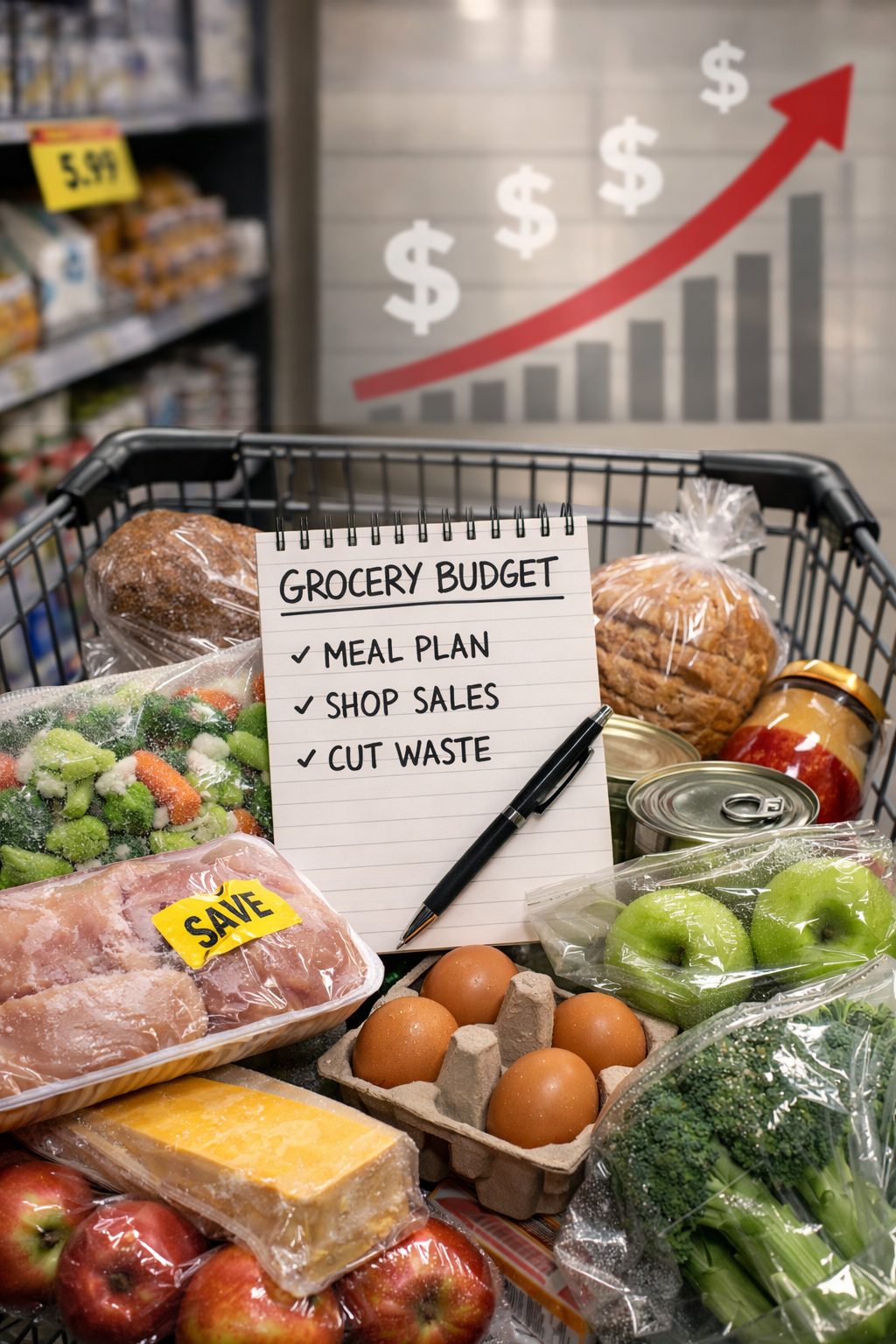
All across Canada, and to a lesser extent in the U.S, price of groceries is no longer a small conversation between family members on the dinner table, or between friends, but has become a full-fledged political crisis in some circles. Although the general inflation rate has come down from highs of 3-4% just a few years ago, current food inflation rate is sitting at around 4%, having barely budged in last few months, despite what the government may otherwise claim.
With food prices taking a big chunk of household’s finances, it is important that we are intentional and aware of how and what we are spending our money on. Here are tips that are not only socially and scientifically proven to save you money, they are mostly easy to follow, at least not all ten at once.
1. Shop Your Kitchen First
Check your fridge, freezer, and pantry before you buy anything. Most people already have half the ingredients they need. This is especially the case for those who like to do a lot of their shopping from Costco, where they buy things they already have. Even worse, they may put both in the freezer and never use it, until it is expired and have to toss it away.
2. Use a 5–Meal Weekly Rotation
A predictable rotation reduces impulse buys and keeps your list tight and cheap. If you know what you are making and eating ahead of time, you are less likely to buy things you don’t need.
3. Buy Ingredients, Not Products
Whole foods cost less and stretch further. Examples: block cheese, whole veggies, whole chicken. Get those and save money.
4. Follow the Unit Price Rule
Ignore the big price tag. Compare by price per 100g or per item – that’s where the real savings hide. This makes comparison a lot easier, especially if you are buying two similar items and you decide to buy based on price only.
5. Shop the Sales Cycle
Canadian grocery stores run 4–6 week cycles. Stock up on non‑perishables and freeze meat when prices hit their low point.
6. Use Simple Price‑Matching
Walmart, No Frills, and FreshCo often match competitor flyers. And this only takes mere minutes for significant savings.
7. Buy Frozen Fruits & Veggies
Cheaper, lasts longer, zero waste, same nutrition. Some people argue that freezing reduces nutrients, but research shows the difference is negligible – and in many cases, frozen produce actually retains vitamins better because it’s frozen at peak freshness. For everyday cooking, smoothies, and meal prep, most families won’t notice any difference at all.
8. Reduce Food Waste
A weekly “clean‑out meal,” freezer‑first cooking, and proper storage can save $1,000+ a year. If your fridge or freezer is full to the max, empty that first or reduce it to 20% capacity before you make it back to the grocery store.
9. Use Cashback Apps (Not Coupons)
Flashfood, Checkout 51, PC Optimum, Ampli. Quick, easy, no clipping.
10. Shop at the Right Time
Evenings and early mornings often have 30–50% markdowns on meat, bakery, and produce.
In a time when grocery bills feel like they’re rising faster than paycheques, small, consistent habits make the biggest difference. You don’t need extreme couponing or complicated hacks – just awareness, intention, and a willingness to build smarter routines in the kitchen and at the store. Apply even a few of these strategies and you’ll feel the pressure ease, your budget stretch further, and your household waste shrink. In a landscape where food inflation may not settle anytime soon, taking control of what you can do is the most reliable way to protect your wallet and your peace of mind.
1 thought on “Top 10 Grocery Savings Tips (Without Coupon‑Hoarding)”