
When people talk about paying off debt, the conversation usually focuses on the same familiar strategies: create a budget, cut expenses, use the debt snowball method, or attack the highest-interest debt first. While those methods can absolutely work, they often overlook something just as important as the math behind debt repayment: human behaviour.
The truth is, paying off debt is not only a financial challenge-it is a psychological one. The strategies that work best are often the ones that change how we think about money, create momentum, and make it easier to stay consistent over time. Imagine this: you get paid enough money to afford paying a min of $1K a month towards your $25K credit card balance, intending to pay it all off within 2 years. There is only one issue though: you are also incurring close to $1K a month in additional credit card spending. In other words, you are not making any progress, simply because you don’t have a strong discipline. That is an example of human behaviour that doesn’t help in managing debt.
Here are three unconventional debt-reduction methods that may seem simple, but can be surprisingly effective.
1. The Debt Auction Method: Give Every Extra Dollar a Job
Most people wait until the end of the month to see what money is left over before making an extra debt payment. The problem is that money sitting in your account has a way of finding something to spend itself on unless you get to it first.
The Debt Auction Method flips that approach. Instead of waiting for a large amount of money to appear, you immediately “auction off” every unexpected dollar that comes your way and send it toward your debt.
Maybe you receive a $25 refund, sell an unused item online for $60, save $15 on your grocery bill, or receive a small workplace reimbursement. Instead of allowing those dollars to disappear into your everyday spending, they immediately get assigned a purpose: reducing your debt. It is similar to paying yourself first, but instead of spending it, you reassign it toward debt elimination.
Individually, these amounts may seem insignificant. But over the course of a year, dozens of small payments can add up to hundreds or even thousands of dollars. More importantly, they create a sense of progress. Paying off debt becomes less of a painful sacrifice and more like a game where you are constantly looking for opportunities to win.
The psychology behind this method is simple: money that never becomes available to spend is money you never miss.
2. Reverse Lifestyle Inflation: Don’t Let Your Income Increase Your Debt
One of the biggest obstacles to building wealth is lifestyle inflation. As people’s income grows, their spending often grows with it. A raise leads to a nicer car, more expensive vacations, more subscriptions, or simply a higher monthly spending baseline.
The problem is that many people spend their raises before they even receive them. They adjust their lifestyle upward and then wonder why they still feel financially stretched. This is the classic life creep dilemma.
Reverse lifestyle inflation takes the opposite approach. Every increase in income becomes an opportunity to accelerate your debt repayment before you become accustomed to having that extra money.
A $150 monthly raise? Send that $150 toward debt. A $2,000 bonus? Use it to knock down your balance. A reduction in a monthly bill? Increase your debt payment by the same amount.
The reason this works so well is because you don’t actually feel like you are giving anything up. Your lifestyle stays exactly the same-you simply redirect future increases toward becoming debt-free. Over time, this creates a powerful gap between what you earn and what you spend.
The goal is not to live with less forever. The goal is to temporarily prevent your lifestyle from expanding while you use your increased income to buy back your financial freedom. Once you have paid off your debt, you can reallocate this money to savings and investments. In other words, you went from one goal (paying off debt) to an even better goal (saving and investment).
3. The Hours of Freedom Method: Convert Debt Into Your Time
One of the most powerful ways to change your relationship with debt is to stop thinking about it only in dollars.
Instead, think about debt in terms of your time.
For example, if you earn $35 per hour after taxes and you have $10,500 in debt, that debt represents 300 hours of your working life. It is not just a number on a statement-it represents evenings, weekends, and mornings spent working to pay for something in the past.
This mental shift can be incredibly powerful. A $70 payment is no longer just $70. It represents two hours of your life that no longer belong to a lender. Every payment you make is buying back a small piece of your future.
This approach works because many people value their time more than their money. When you see debt as time you have already committed from your future, unnecessary purchases become harder to justify. That $100 impulse purchase is no longer just $100-it may represent several hours of your life. In fact some people use such a trick to control their spending on unhealthy food, with each unhealthy item costing them several hours to burn.
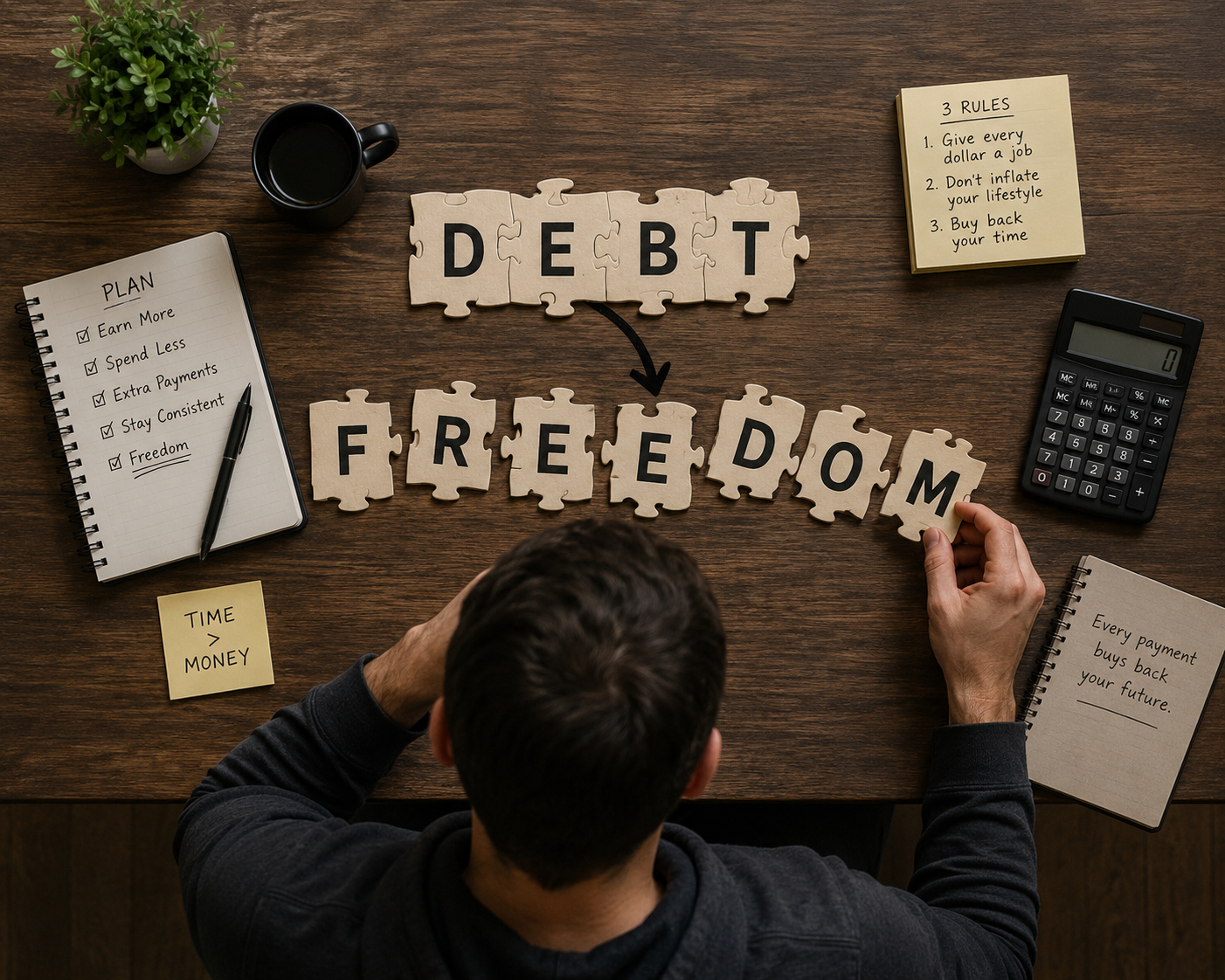
Paying off debt is ultimately about reclaiming control. These strategies do not rely on complicated formulas or unrealistic sacrifices. They work because they deal with the human side of money: our habits, our emotions, and the way we make decisions.
The best debt repayment strategy is not always the one that looks perfect on paper. It is the one that you can actually stick with long enough to change your financial future.